
Methods compared
On the surface,
or into it?
Most ways to decorate a product lay a layer on top: a decal, a film, a vinyl. You can feel the edge. It can peel. UPrint chemical transfer is the one method that fuses the print into the surface. Here is the honest comparison.
The difference at a glance
Six methods, one winner on hard goods.
| Capability | UPrint | Water decal | UV DTF | Film / DTF | Vinyl | Dye |
|---|---|---|---|---|---|---|
| Print sits INTO the surface (no film) | ✓ | ✕ | ✕ | ✕ | ✕ | fabric only |
| No edges to peel or lift | ✓ | ✕ | ✕ | ✕ | ✕ | ✓ |
| Full colour + solid white | ✓ | ✓ | ✓ | ✓ | spot | ✕ |
| Curved, dimpled & 3D shapes | ✓ | hard | simple | ✕ | ✕ | ✕ |
| Hard goods (mug, glass, metal, hat) | ✓ | ✓ | ✓ | ✕ | ✕ | coated only |
| Dishwasher-safe finish | ✓ | ✕ | ✕ | ✕ | ✕ | coated only |
| Works on dark surfaces | ✓ | ✓ | ✓ | ✓ | ✓ | ✕ |
| No cutting / weeding / sliding | ✓ | ✕ | apply | cut | ✕ | ✓ |
Comparison reflects typical capabilities of each method on hard and curved goods. UPrint also supports film and paper transfers for textiles.
Looking at a desktop UV printer like the eufyMake E1? See where it shines, where the bed and shape limits stop it, and how UPrint completes your setup.
UV printing & UPrint →See the difference
Not a sticker.
Printed in.
Drag the handle. The graphic follows the ridged, layered surface of a 3D-printed part. No film, no edge, nothing to peel. That is the line between a decal and a chemical transfer.
See more samples →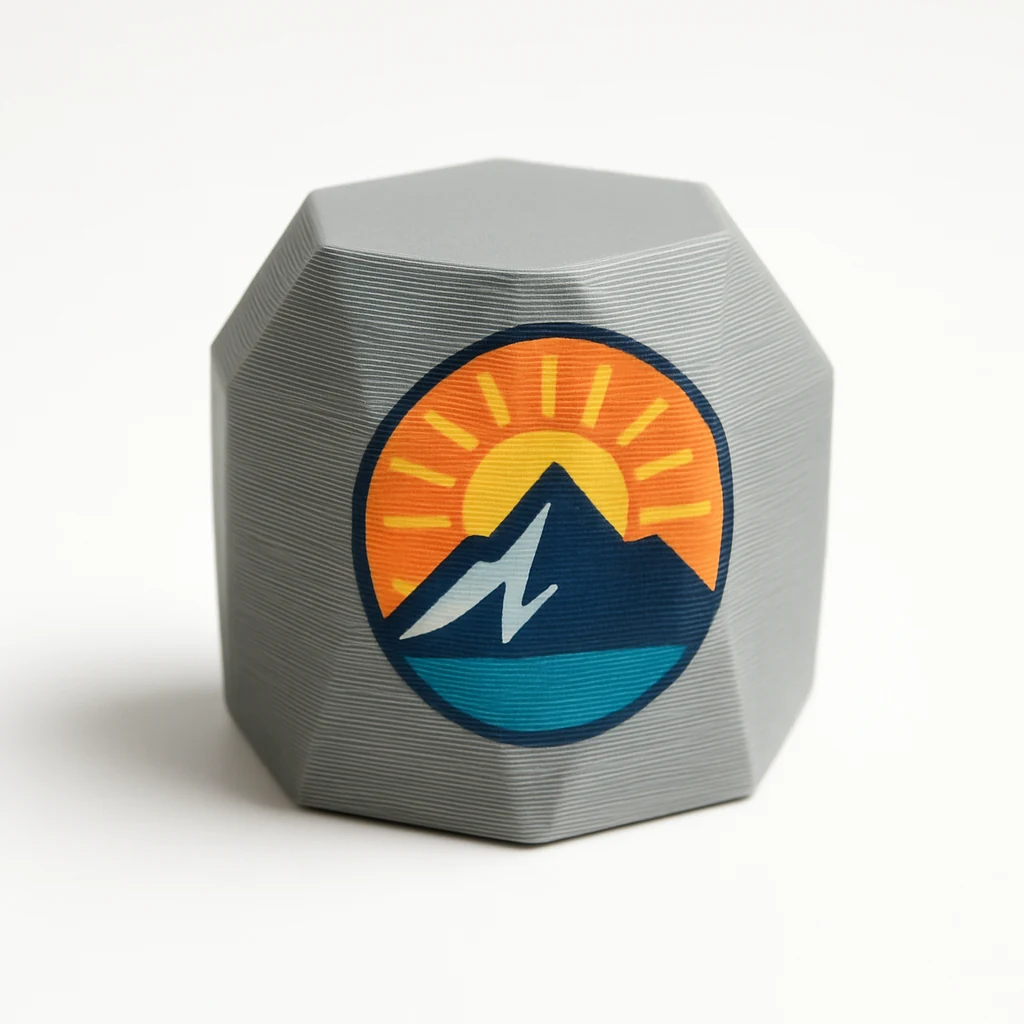 Printed into the surface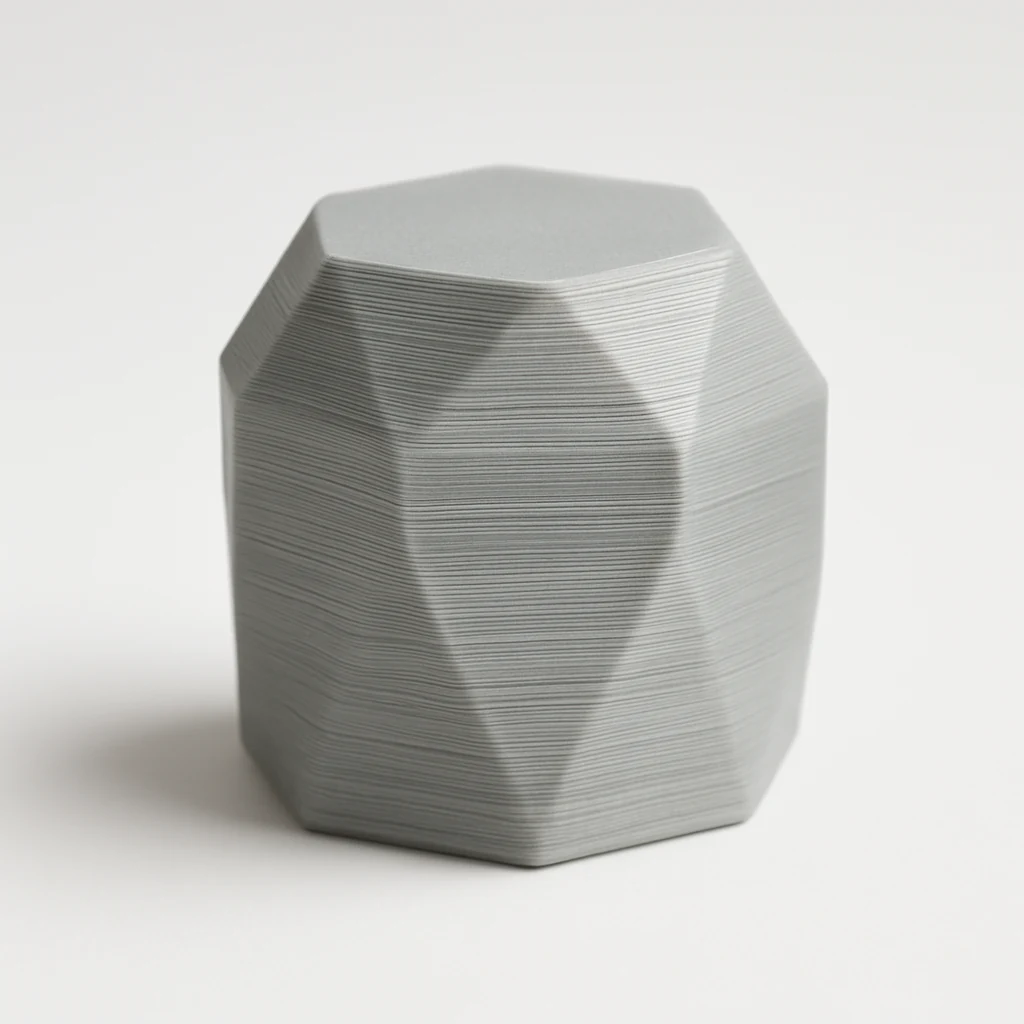
Every method, honestly
What each method can fully do.
A straight, fair breakdown of every way to decorate a product: what it genuinely does well, and where it hits a wall. UPrint is the rare system that covers both hard goods and soft apparel, full colour and white, bonded into the surface, at any size, with no minimums.
UPrint chemical transfer
Most versatileFull colour PLUS solid white, bonded INTO the surface. Hard goods (mugs, coated tumblers, glass, metal, wood, hard hats, golf balls, 3D parts) AND soft goods (tees, hoodies, hats, bags, shoes, umbrellas). Any size or shape, dishwasher-safe, no minimums.
A workshop system to set up and run (printer, press, chemicals). Training, videos and the Atlas bot make it quick to learn.
UV printing (direct-to-object)
Full colour, white and gloss with raised 3D texture, printed straight onto the item. Strong, durable, industrial-grade on flat, smooth rigid materials like metal, wood, acrylic and glass.
The item must fit the machine and sit fairly flat. Weaker on rough or textured surfaces. Does not do soft apparel.
UV DTF (crystal-label decals)
Full colour, white and a glossy varnish printed to film, then peeled and stuck onto smooth hard goods. Wraps curves a flat machine cannot reach.
It is an adhesive decal that sits on top. Edges can lift on rough, oily or soft-touch surfaces, and it is not reliably dishwasher-permanent.
DTF (textile)
Full colour with white on fabric: cotton, polyester, blends, nylon, leather. Soft, stretchy, 50+ washes, no minimums.
A fabric-only method. It does not decorate hard goods at all.
Sublimation / dye
Vibrant, permanent, dyed-in colour on polyester fabric and polymer-coated blanks (coated mugs, aluminium, phone cases).
No white ink and translucent, so it cannot print on dark, cotton, raw metal, bare wood or uncoated glass and ceramic.
Pad printing
Sharp small logos on curved, textured and irregular items. Very fast at high volume, durable inks, many substrates.
Spot colour only, not photographic. Needs an etched plate per colour and the image area is small.
Screen printing
Bold, opaque, very durable solid colour on flat fabric. The cheapest option per unit at high volume.
Economical only at 1 to 6 colours, not photographic, needs a flat area, and carries order minimums (around 24 to 50+).
Water slide / ceramic decal
Fine full-colour detail. Kiln-fired ceramic decals can be food-safe and dishwasher-durable when fused into the glaze.
Craft waterslide sits on top, is hand-wash only and needs a clear coat. Kiln decals need a kiln and work on ceramics only.
White toner transfer paper
Full colour with white, heat-fused onto the product. Affordable and simple for flat transfers.
A flat method that sits on the surface, limited on curved and 3D items. (UPrint’s open printer can also run this paper.)
Vinyl (heat transfer vinyl)
Bold spot colour, great for signage, names, numbers and durable outdoor work.
Cut and weeded by hand, no photographic detail, a layered vinyl feel, and best on simple shapes and flat fabric.
One printer, every method
You are not locked in.
The UPrint white toner printer runs our patented chemical transfer that prints into the surface, and it also runs the standard white toner transfer media you may already use, heat-fused outside the printer. You get the unique method and the familiar ones, on one machine. No other system gives you both.